By Lucas Malaspina
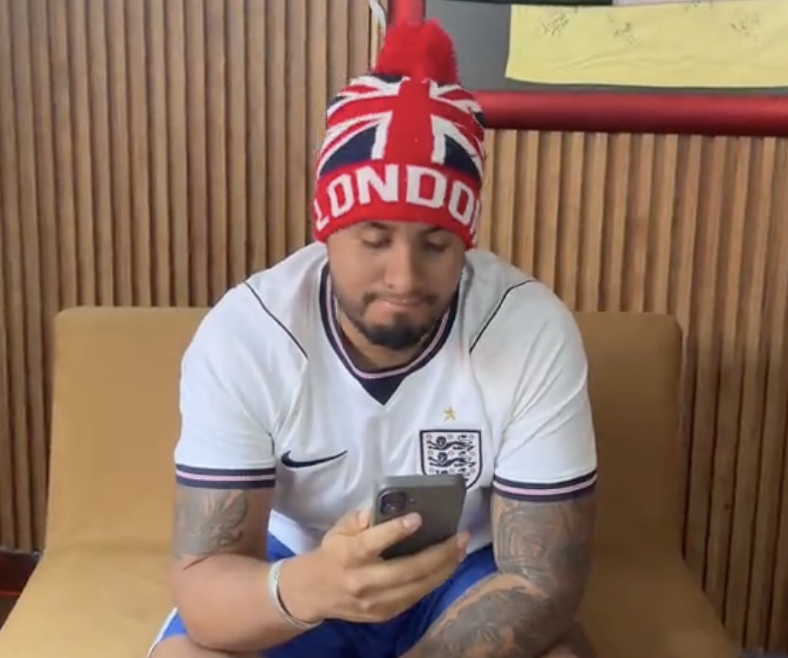
Danny Navarro doesn’t get involved in politics. His TravelFutbolFan account serves as a practical guide for fans who want to attend the 2026 World Cup without going broke: how to travel, how to save money, how to buy tickets, and how to get around between venues. For the World Cup co-hosted by the United States, however, that service began to take on a different meaning. The concerns Navarro highlighted were no longer limited to flights and hotels but came to include ICE, immigration checks, potential legal problems for international fans, and the lack of real guarantees from FIFA. The logistical advice came with a political interpretation. The audience that came for practical information received—without seeking it—a stance on the World Cup.
That is gray communication. It is one of the most effective forms of political influence—and one of the least understood by most officials and candidates. It is assumed that politics is conducted through channels that are advertised as political: parties, ads, campaigns, and partisan media. But the audience you most need to reach is no longer there. It’s in the spaces where people choose to spend their free time, listening to someone they perceive as one of their own—not as someone who wants something from them.
In Mexico, Miguel Reina and his show Balón y Banqueta do the same thing with a different approach. It’s not a partisan media outlet denouncing FIFA, but rather a soccer-loving creator who translates the World Cup experience into cultural criticism: “They gentrified our dream.” The political framing comes through an emotional lens: memories of the Azteca Stadium, the inability to enter the stadium, children listening to the goals from rooftops, and the bar and the sidewalk as soccer’s last remaining spaces for ordinary people. A minor but similar case appears on @klintoncod, an account linked to the SportyTV network, which highlighted on TikTok alleged unequal treatment of Somali and Senegalese fans during the tournament. Three creators, three tones, a single operation: the information the audience is looking for comes with a political interpretation the audience wasn’t seeking.
The problem with politics that seems political
There is a principle of communication that politics takes decades to internalize: people put up strong defenses against messages they perceive as self-serving. An advertisement triggers skepticism; a campaign ad creates even more distance; a politician talking about their own achievements loses their audience before the first sentence. A political party’s official channel bears this inherent problem: everything it broadcasts arrives already discounted by “they’re saying this because it suits their interests,” and that discount cannot be offset by the quality of the content or the honesty of the message. The channel contaminates the signal.
A content creator who discusses the same topic from their own territory does not carry that discount—not because they are more honest, but because their audience perceives them as one of their own. The trust that a political party takes years to build is automatically inherited on that channel. That asymmetry of credibility is at the heart of gray communication.
The academic concept that captures part of this dynamic is that of incidental political exposure, formulated by Heiss, Knoll, and Matthes (2020): the encounter with political information or frames in spaces whose primary purpose is not politics. A recent analysis by Much, Rutherford, Nagler, and Tucker of transcripts from nearly 30,000 episodes from 274 of the most popular podcasts in the United States in 2024 confirms this logic: in non-political genres—sports, comedy, science, technology, and cultural conversation—ideological cues and political references appear embedded in conversations that are not political. According to that analysis, political content accounts for about 4% of speakers’ contributions. The figure seems small; therein lies, in part, the effect. Those frames reach audiences who do not consume traditional political media and did not tune in to these programs seeking politics.
Research on political communication and digital culture offers additional support. American political scientists Yanna Krupnikov and John Barry Ryan (2022) show that a large portion of the public does not engage with politics with the same intensity as those most involved (13% are low-involvement and 65% are moderately involved), and Klar, Krupnikov, and Ryan (2018) add that part of the rejection of the adversary is also a rejection of partisanship and explicit political discourse. Channels perceived as institutional create more distance than spaces where politics is embedded in a pre-existing relationship of trust. Research on parasocial relationships—from Horton and Wohl (1956) to Abidin (2018) on influencers—completes the mechanism: creators build perceived familiarity and intimacy, which increases their audiences’ willingness to listen to value-laden messages.
While the World Cup examples illustrate this dynamic on a small scale, the 2024 Trump campaign demonstrates it on a continental scale. On the victory stage, Ultimate Fighting Championship (UFC) President Dana White publicly thanked Joe Rogan, Theo Von, the Nelk Boys (who are Canadian), Adin Ross, and Bussin’ With The Boys. Several of these shows had not maintained a uniformly conservative ideological line throughout the year; their value lay, precisely, in not having one. They functioned as safe havens of trust, entertainment, and masculine conversation where politics could enter with less solemnity, less defensiveness, and greater capacity to circulate. The acknowledgment was not directed at an editorial alliance; it was directed at a cultural infrastructure. The low political density did not diminish the channel’s strategic impact; it was what enabled it.
MMA mogul Dana White and Donald Trump have been friends ever since the current president offered White the chance to host his venture at one of his casinos. White returned the favor by supporting him in his political career. White “felt that if the president stayed on Fox News, he wouldn’t win,” so as part of that alliance, for Trump’s third presidential campaign, he helped him reframe his approach. “He introduced me to people I’d never heard of—young guys,” Trump recently told TIME. “I was being interviewed by 20-year-olds. I’d ask them, ‘Where the hell did you find these people?’ They’re called influencers. But I did a lot. I became friends with some of them. They’re good kids, they have a big following, and it all helps.”
Branded content in politics
The marketing concept that best describes this mechanism is branded content. A brand that interrupts a program with its advertising has less and less impact; a brand that funds content the audience wants to consume—and appears seamlessly within it—still has that impact. Gray communication does the same with ideological frameworks. A cooking channel that explains why multinational chains are destroying the regional economy implants a progressive frame in an audience that tuned in for recipes. A fitness podcast that mentions the importance of the public health system while discussing access to training does the same. A travel channel that showcases public transportation infrastructure as part of the experience does so as well. None of these audiences felt they were being subjected to a political discourse. But they were exposed to a frame, and frames, repeated in enough different contexts, become ingrained as common sense.
The concept has a solid theoretical foundation. Entman’s (1993) studies on framing and McCombs and Shaw’s second-level agenda-setting theory describe how the media not only determine what to think about but also how to think about it. In Network Propaganda, Benkler, Faris, and Roberts (2018) documented how various U.S. media networks function as frame-distribution systems through entertainment and pop culture nodes, with significant asymmetries between the right-wing and center-left ecosystems in terms of internal integration and external permeability.
In the Spanish-speaking world, research on political influencers and digital platforms in Argentina (Slimovich, 2025; Ariza, 2023) describes how ideological frames circulate in native formats on TikTok, YouTube, and X, with visibility dynamics that—as I argue—may precede the electoral consolidation of the associated political figures. I’ve never listened much to Joaquín Sabina (a Spanish singer who is very successful in Argentina), but I remember that one of his lyrics goes: “You go to hell through shortcuts, syringes, and prescriptions.” It’s true, as followers of Durán Barba of all stripes repeat, that demand (from public opinion) is what dictates supply (of political representation). The “shortcuts, syringes, and prescriptions” (the mediations) through which demand travels are where we must anchor ourselves: those that exist, those we must stimulate, and those we must create.
Ecuadorian consultant Andrés Elías calls this mode of operation lateral campaign: competing in the territories and communities where the audience constructs its identity. None of the cases described is entirely accidental or entirely spontaneous. There is, to varying degrees, coordination, relationship-building, and implicit or explicit agreements regarding frameworks and timing. The appearance of organic development is part of the product. Sophistication and dishonesty, it bears repeating, are two different things.

A digital political outlet is not enough: a cultural platform is needed
It’s worth clearing up a common misunderstanding here. When pre-TikTok political parties set out to build something in the digital space, they tend to envision something similar to Canal Red, the digital media outlet launched by Pablo Iglesias: journalists, political analysis, debates, news coverage—a channel that competes in the realm of political opinion. That is not the realm of gray communication. Canal Red is a political media outlet that speaks to people who are already politically engaged; it is useful for certain things, but it does not reach the segments that gray communication seeks to target. Canal Red’s audience already has formed opinions; the audience of Olga (a successful Argentine streaming channel that had the opportunity to interview Leonel Messi) is deciding what to watch on a Saturday afternoon. Gray communication, if it is to exist, must take its cue from examples like Luzu, Olga, or Blender in its first year—not Canal Red: entertainment, humor, pop culture, relatability, and emotion. Content that people seek out because they’re interested in it, not because they want to learn about politics—and within which ideological frameworks are inserted sporadically as branded content. The distinction isn’t aesthetic; these are different audiences and different mechanisms of influence.
Matthew Hindman, in The Internet Trap (2018), argues that digital media with a defined political identity tend to capture audiences that are already committed, generating high intensity but low expansion—a phenomenon that cuts across both left- and right-wing positions. Data from the Reuters Institute show that video platforms and podcasts are the fastest-growing channels for news consumption among young people, while digitally native media with an explicit partisan identity tend to consolidate already aligned audiences rather than expand into less politically engaged segments.
What it calls for is learning not to show up
Gray communication does not require the party to be visible: it requires the party to understand that its role at this level is to define strategy, frames, and timing, and then step back from the scene. The production, identity, and credibility of these spaces depend on their perceived independence; any explicit party branding destroys the mechanism. A party that insists on appearing at every level with its logo and message is sabotaging the only architecture capable of reaching places its official channels cannot. What it does require is sustained investment, strategic patience, and a willingness to relinquish control over the narrative in the short term in order to gain cultural influence in the medium term. These are precisely the three things that pre-TikTok parties struggle to do.
Navarro doesn’t see himself as part of a political strategy. His audience doesn’t see itself as the recipient of a narrative framework. The party—if there is one—doesn’t appear anywhere in the content. And yet, the interpretation of power is formed, circulates, and takes root. Politics that understands this asymmetry knows that its task, at this level, is to define the framework and let the scene unfold. The rest of the work is done—with everything in its favor—by someone who doesn’t seem to be engaging in politics.
References
Abidin, C. (2018). Internet Celebrity: Understanding Fame Online. Emerald Publishing.
Ariza, A. (2023). La comunicación política de Javier Milei en TikTok. Intersecciones en Comunicación. https://www.scielo.org.ar/scielo.php?pid=S2250-41842023000200006&script=sci_arttext
Arnesson, J. (2023). Influencers as ideological intermediaries: Promotional politics and authenticity labour in influencer collaborations. Media, Culture & Society, 45(3), 528–544. https://doi.org/10.1177/01634437221117505
Benkler, Y., Faris, R., & Roberts, H. (2018). Network Propaganda: Manipulation, Disinformation, and Radicalization in American Politics. Oxford University Press.
Entman, R. M. (1993). Framing: Toward clarification of a fractured paradigm. Journal of Communication, 43(4), 51–58.
Heiss, R., Knoll, J., & Matthes, J. (2020). Antecedents of intentional and incidental exposure modes on social media and consequences for political participation. Acta Politica, 55, 443–468.
Hindman, M. (2018). The Internet Trap: How the Digital Economy Builds Monopolies and Undermines Democracy. Princeton University Press.
Horton, D., & Wohl, R. R. (1956). Mass communication and para-social interaction: Observations on intimacy at a distance. Psychiatry, 19(3), 215–229.
Klar, S., Krupnikov, Y., & Ryan, J. B. (2018). Affective polarization or partisan disdain? Public Opinion Quarterly, 82(2), 379–390.
Krupnikov, Y., & Ryan, J. B. (2022). The Other Divide: Polarization and Disengagement in American Politics. Cambridge University Press.
McCombs, M. E., & Shaw, D. L. (1972). The agenda-setting function of mass media. Public Opinion Quarterly, 36(2), 176–187.
McCombs, M. E., Llamas, J. P., López-Escobar, E., & Rey, F. (1997). Candidate images in Spanish elections: Second-level agenda-setting effects. Journalism & Mass Communication Quarterly, 74(4), 703–717.
Mediaite. (2024). Dana White hails Joe Rogan, Theo Von, Nelk Boys and Adin Ross in fiery Trump victory speech. https://www.mediaite.com/politics/trump/dana-white-hails-joe-rogan-theo-von-nelk-boys-and-adin-ross-in-fiery-trump-victory-speech/
Much, M., Rutherford, K., Nagler, J., & Tucker, J. A. (2025). The Joe Rogan of the left, right, and center is just … Joe Rogan. Good Authority. https://goodauthority.org/news/podcasts-joe-rogan-of-the-left-right-and-center-is-just-joe-rogan/
Newman, N., Fletcher, R., Robertson, C. T., Ross Arguedas, A., & Nielsen, R. K. (2024). Reuters Institute Digital News Report 2024. Reuters Institute for the Study of Journalism.
Slimovich, A. (2025). Argentine political influencers on X during the 2023 presidential campaign. Comunicación y Sociedad.


